
We are not short of data. There is more information than ever about climate, health and our communities. But making sense of it, and actually using it, is still surprisingly difficult. Data sits in different places, in different formats, owned by different organisations. Even when you can find it, connecting it to real decisions is another challenge entirely.
We brought together practitioners, policymakers and data enthusiasts for a session of the Liverpool City Region Data Community of Practice to explore exactly this. The focus was simple. How can data better serve people, places, and the planet?
A community built on sharing
One of the things that stands out about this community is how open it is. People come with different perspectives and levels of experience, but there is a shared sense that no one has all the answers.
Over time, the group has grown beyond its regional roots. What started as something local now draws interest from much further afield. That feels important. The challenges around data are not unique to one place, and neither are the opportunities.
At its heart, this is a space for sharing. Not just successes, but also the messy, practical realities of working with data day to day.
Seeing the connections
A strong theme running through the session was connection. Not just between people, but between datasets that are often treated separately.
The first presentation, from Carbon Happy World, started from a simple but powerful idea. Climate, environment, and health are usually discussed in isolation. In practice, they shape each other in ways that are felt very locally.
What happens if you bring those together?
By layering data such as life expectancy, flood risk, air quality and carbon emissions, their work begins to show how these systems overlap in specific places. Not at a national level, but at the level of neighbourhoods and streets.
And that is where things start to shift.
Because once you can see those connections, different questions begin to emerge. Why do some areas experience greater health risks? How does the local environment shape everyday life? And what might that mean for how resources are targeted?
It also brings into focus a more practical challenge. Even where data exists, it is often difficult for community groups to access or use it. Applying for funding or making a case for change can involve piecing together information from multiple sources, often under time pressure.
So the issue is not just about having data. It is about whether people can actually work with it.
From data to decisions
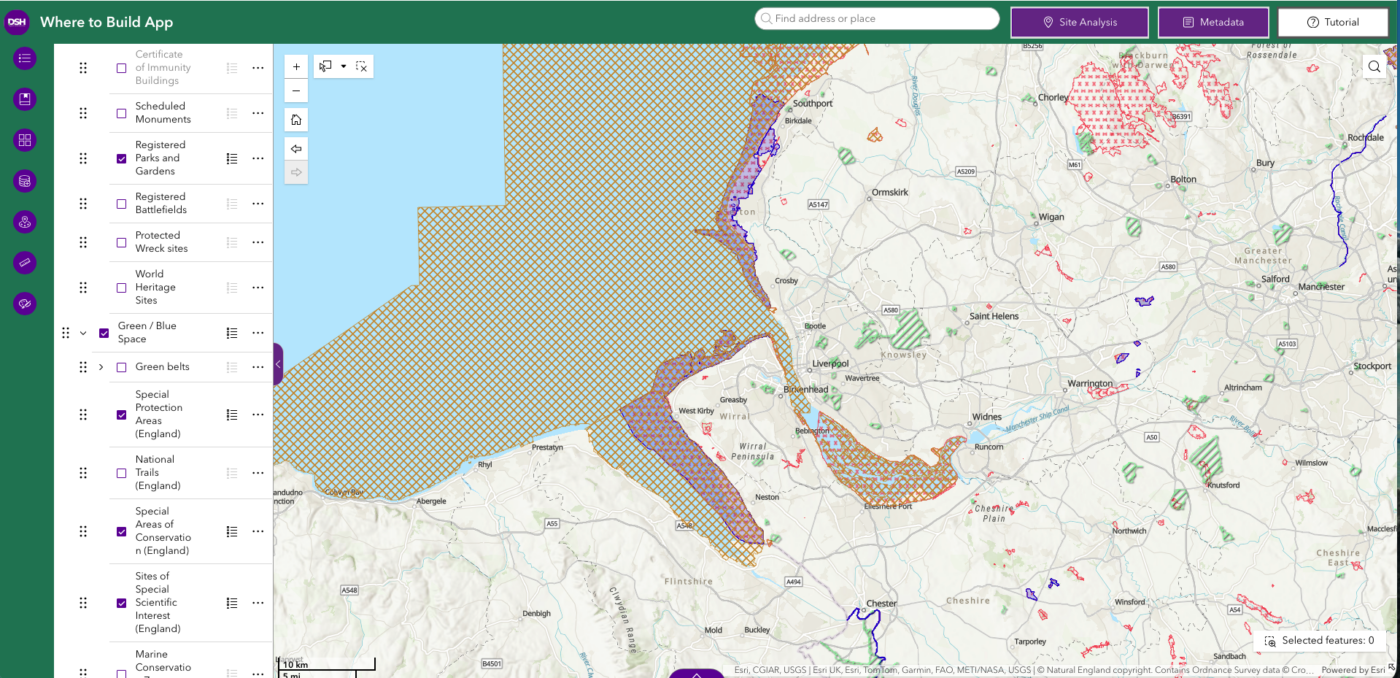
The second presentation, from the University of Manchester’s Digital Solutions Hub, which has been developed to open up data held by the Natural Environment Research Council (NERC), approached a similar problem from a different angle.
There is no shortage of environmental data. In fact, there are vast amounts of it. The difficulty is knowing what to do with it. One question that came up was a familiar one. If you make data available, does that mean people will use it? Experience suggests not always.
The work being developed through the Digital Solutions Hub tries to bridge that gap. Instead of expecting users to navigate complex datasets, it allows them to ask questions in more natural ways. For example, where might be most vulnerable to flooding in the future, or which areas are exposed to higher levels of air pollution?
That shift feels significant. It moves the focus away from the data itself and towards the questions people are trying to answer.
Instead of searching through catalogues or relying on technical queries, people can ask straightforward questions and be guided towards relevant datasets.
What sits behind this is still the same underlying data and metadata. The difference is how people get to it. It is not trying to answer the question for you, but helping you find the information that might, and pointing you towards sources that can be understood and trusted.
That might sound like a small change, but it lowers a real barrier. If finding the right data becomes easier, it opens up the possibility for more people to actually use it. And that, in itself, starts to change how data fits into everyday decision-making.
Again, the theme comes back to usability. Data is most valuable when it helps people make decisions, not when it sits in a catalogue.
The challenges that keep coming up
Across the discussion, some familiar challenges surfaced again. Access to data remains uneven, particularly when it comes to areas like health and housing. Even when there is willingness to share, concerns around governance, licensing and trust can slow things down.
There is also the question of fragmentation. Useful data exists, but it is often scattered across different systems, making it hard to build a complete picture.
And then there is capacity. Many of the people who could benefit most from data, such as community groups, do not always have the time or resources to navigate complex tools.
None of this is new. But hearing it echoed across different perspectives is a reminder of how persistent these issues are.
So what does this mean?
Perhaps the most interesting takeaway is that the conversation is shifting. It is no longer just about opening up data. That feels like a starting point rather than an end goal.
The focus is moving towards connection. Connecting datasets, connecting tools to real needs, and connecting people into the process of understanding and using data.
There is also a sense that data needs to feel more local. More grounded in the realities of specific places and communities. And, importantly, more usable by the people who need it.
That raises bigger questions. Who gets to access and interpret data? Who gets to act on it? And how do we make sure it supports better outcomes, rather than simply better analysis?
Watch the full discussion below and get videos from all of our past events on the Vimeo channel. To find out about our next events in the Liverpool City Region, and beyond, sign up to the LCR DCP mailing list or visit our events page.
Huge thanks as ever to our speakers, attendees and the University of Liverpool’s Civic Health Innovation Labs (CHIL) for their support. If you’d like to talk at a future LCR DCP event, email kirsty@lcrdcp.org, no topic too big or small.